
Updated on 11 May 2026
Technology keeps improving. Sometimes it moves forward in big jumps. Other times it’s just small steps. And with each advancement, what developers expect from a VPS shifts.
A decade ago, a VPS server with SSH access, a couple of cores and a Linux distro was enough to get most people started. In 2026, that same setup still works, but only in the way a landline still makes phone calls. It technically functions, it just doesn't match how people work now.
These shifts aren't about wanting more power for the sake of it. It's about workflows. Developers now build with containers, deploy through CI/CD pipelines, and monitor with dashboards that pull data in real time. They spin up staging environments on a Tuesday afternoon because a feature branch needs testing before a Thursday release.
The VPS they choose needs to keep up with that pace, and a surprising number of providers still don't.
Container-ready environments as standard
Docker changed how applications get built, tested and shipped. In 2026, containerised workflows are the default for most teams building web applications, APIs and microservices. They're not a niche developer preference, and a modern VPS needs to support container workloads without friction. At a minimum, developers expect:
- A clean Linux VPS environment where Docker installs and runs without dependency headaches
- Enough RAM to run multiple containers alongside the host OS (2GB is tight, with 4GB being the realistic starting point for anything beyond a single container)
- Storage I/O that can handle the constant read/write cycles containers create, especially during image builds and database operations
You now have some providers offering one-click Docker preinstalls or cloud-init scripts that get a container-ready environment running within minutes of provisioning. But others leave it entirely to the developer – which is fine, if the underlying OS image and kernel support the full container toolchain without fighting you.
Developers don't expect a VPS provider to become a container platform. They expect the VPS to run containers cleanly without getting in the way.
Provisioning speed sets the tone
Developers will judge a VPS provider within the first 10 minutes.
Can you go from "place order" to "SSH into a running server" in under 5 minutes?
That's the bar now. Not an hour. Not "up to 24 hours" (with someone manually configuring the hardware).
Fast provisioning has a practical impact. Teams that spin up temporary VPS instances for testing, staging or demos need to do it quickly, and to then take it down just as fast. If standing up a fresh VPS server takes 30 minutes and involves a ticket, it won't fit into an afternoon workflow. Developers will work around it, if they have to, but that usually means leaving old instances running longer than they should. This wastes money and creates security liabilities.
The best providers now provision in under 3 minutes, with API access that lets you automate the entire lifecycle – create, configure, snapshot, destroy. That's what competent infrastructure looks like in 2026.
Full root access and built-in recovery tools
Full root access is non-negotiable. Developers need to install custom software, configure services, adjust kernel parameters, set up reverse proxies and manage their own firewall rules. A VPS that restricts root access (or buries essential permissions behind a managed panel you didn't ask for) frustrates experienced users fast.
But the expectation in 2026 is a bit more nuanced. Developers want root access and a provider that doesn't leave them entirely alone. That means:
- Automated backups they can schedule and restore from without raising a ticket
- Snapshot functionality that lets them save a known-good state before making risky changes
- A control panel or dashboard that shows resource usage, bandwidth and server health at a glance, but doesn’t need them to install monitoring tools before they've even deployed their application
The bare-minimum VPS doesn't meet that standard anymore. Developers expect full control alongside a sensible set of built-in recovery and visibility tools.
NVMe storage and guaranteed CPU allocation
Developers run benchmarks. They test disk I/O. They notice when a database query takes 40 milliseconds instead of 4. And in 2026, the hardware behind a VPS plan affects whether it's taken seriously.
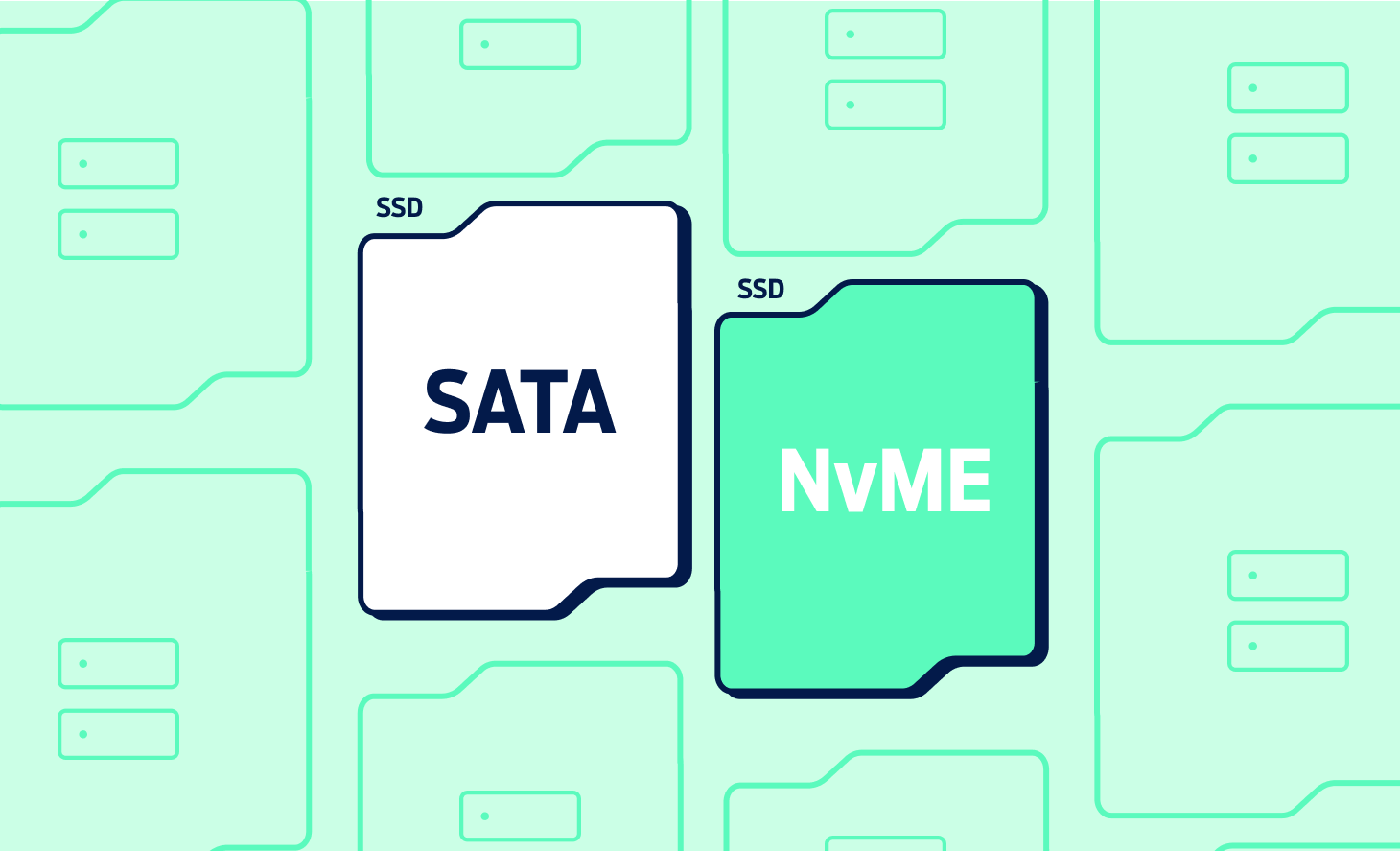
NVMe storage is the expectation now. The performance gap between NVMe and traditional SATA SSDs is too wide to ignore. NVMe handles random read/write operations several times faster, and this can be seen in everything, from Docker image builds to database-heavy page loads. A VPS provider still offering SATA SSDs on entry-level plans is signalling that their infrastructure hasn't been updated recently.
Of course, CPU is just as important. Developers want to know what processors they're running on, and whether the vCPUs in their plan are genuinely dedicated or shared with other tenants. The "noisy neighbour" problem, where one busy VPS on a shared physical host drags down performance for everyone else, hasn't gone away. Providers that guarantee dedicated resources at every tier (or at least make it easy to identify which plans include them) earn trust quickly.
If your site or application performance seems inconsistent and you're not sure why, our VPS monitoring tools guide covers how to track CPU, RAM and disk metrics over time to spot hardware-level bottlenecks.
Self-service scaling through a panel or API
Growth shouldn’t be a support ticket.
Upgrading a VPS should happen through a control panel or API call, with the change applied in minutes. Not "within 24 hours." Not after a manual migration to a different physical server that involves downtime and a new IP address.
Vertical scaling (adding resources to the same server) is the bare minimum. Some providers now offer horizontal scaling options too, letting developers distribute workloads across multiple VPS instances with load balancing handled at the infrastructure level.
But developers want to scale down easily too. If a project finishes or traffic drops after a seasonal peak, they want to step back to a smaller plan without penalty. Providers that only allow upgrades or treat downgrades as a cancellation followed by a new signup lose credibility with anyone who's managed infrastructure before.
For a practical walkthrough on what the scaling process looks like, we have a guide on how to scale your VPS resources that covers the steps involved.
Built-in monitoring from the first minute
The expectation here has changed considerably. Developers no longer want to spend their first hour on a new VPS installing Prometheus, Grafana and a bunch of exporters before they can even see how the server is performing.
A VPS provider's own dashboard should cover the essentials:
- CPU usage over time (not just a snapshot)
- RAM consumption and swap activity
- Disk I/O throughput and latency
- Network traffic in and out
- Uptime history
This doesn't replace the full observability stack a developer might install later. But it gives them something useful from the moment the server goes live. They want enough to make informed decisions about resource allocation and spot problems before users report them.
Providers that treat monitoring as a paid add-on or offer nothing beyond a basic "server is up" check feel behind the curve.
Provider-side security as a given
Security on a VPS has always been partly the developer's responsibility, and that still applies. But developers now want more from the provider's side of the arrangement too.
DDoS protection should be included on every plan. Attacks are automated, indiscriminate and increasingly common. A VPS hosting a side project is just as likely to be targeted as one running a production application. And if DDoS protection isn't part of the base offering, it's worth asking why.
In addition to DDoS protection, developers want to know that the provider's infrastructure is maintained. That means current hypervisors, patched host operating systems, and physical security at the data centre level. On managed plans, the expectation extends to OS-level updates and kernel patches handled automatically.
SSH key authentication should be supported from the initial provisioning step. And ideally, the provider's firewall management tools should be good enough that a developer doesn't need to configure iptables manually before their first deployment.
Predictable pricing with no hidden extras
Developers are price-aware, but not in the way budget shoppers are. They're less interested in the cheapest possible monthly rate and more interested in predictable costs with no hidden fees.
That means:
- Clear bandwidth policies – unlimited or generous enough that normal use doesn't trigger overages. If there are caps, state them plainly.
- Transparent renewal pricing – if the first 6 months cost £5/month and the renewal rate is £15/month, say that upfront. Developers hate the bait-and-switch as much as anyone, and they're more likely to write about it publicly.
- Flexible billing – monthly billing without a long-term contract should be available, even if annual plans offer a discount. Developers often need a VPS for a specific project or a defined period and locking them into 12 months for a 3 month project is unlikely to build loyalty.
- No surprise charges for basics –backups, monitoring, SSL support and a reasonable number of snapshots should be part of the plan, not stacked as extras that inflate the bill.
The providers that get developer pricing right tend to keep it simple. One price, resources clearly stated, no asterisks.
Technical support that can pick up where the developer left off
What a developer expects from support looks very different from what a general consumer expects.
By the time a developer contacts support, they've usually diagnosed half the problem. They know which process is eating RAM. They've checked the logs, and they can tell you the exact error message and the timestamp it appeared. What they now need is someone on the other end who can pick up from that point instead of asking them to restart the server and try again.
Technical support quality is one of the strongest signals developers use when recommending (or warning against) a VPS provider. A support team that understands Linux, can assist with network configuration, and doesn't treat every ticket as a beginner question earns loyalty fast.
Whilst response time counts too, competence beats speed. A 2 minute response that says, "have you tried rebooting?" is worth less than a 15 minute response that says "your OOM killer is terminating MySQL because your innodb_buffer_pool_size is set higher than your available RAM. Here's how you can fix it."
Where this leaves the VPS market
The VPS is the workhorse of modern development. It fits comfortably between the simplicity of shared hosting and the complexity of full cloud platforms, and for a growing number of developers it's the right level of control at the right price.
But developer expectations in 2026 are sharper than they were even 2 years ago. Fast provisioning, container-ready environments, NVMe storage, honest pricing and competent support are expected, rather than viewed as nice-to-haves. Providers that treat VPS hosting as a commodity and compete only on price will lose the audience that knows what it's paying for.
Fasthosts offers VPS plans with NVMe storage, dedicated resources, full root access and UK-based data centres running on renewable energy. If you're looking for a VPS server that keeps pace with the way you work, our plans are well worth a look. And our expert support team is available 24/7 if you've got questions to ask before you commit.